
Prophet Muhammad and Education: The Pursuit of Knowledge in Early Islam
Prophet Muhammad (peace be upon him) stands not only as a spiritual guide and reformer but also as a beacon of intellectual awakening. In a time when ignorance was widespread, and literacy among the Arabs was minimal, the Prophet’s unwavering emphasis on the pursuit of knowledge laid the foundation for a profound cultural, educational, and scientific renaissance within the Muslim world. His teachings instilled the value of learning as a religious and social obligation, thereby revolutionizing the intellectual landscape of his time and that of future generations.
The Qur’anic revelation began with the command “Iqra” – “Read” (Surah Al-‘Alaq 96:1), an instruction that was remarkable in the 7th-century Arabian context. This divine imperative reflected the central role that education would play in the Islamic worldview. From the earliest moments of prophethood, the acquisition of knowledge was linked to spiritual development. Knowledge was not limited to religious sciences but extended to all forms of beneficial learning. The Prophet encouraged both men and women to seek knowledge regardless of age, class, or tribe, thereby dismantling social and intellectual hierarchies that had long plagued Arab society.
The Prophet’s commitment to literacy can be seen in his approach to the prisoners of war after the Battle of Badr. Instead of imposing harsh punishments, the Prophet offered freedom to any prisoner who could teach ten Muslims how to read and write. This act was a strategic step toward building a literate community, and it emphasized education as a cornerstone of Islamic civilization. It also demonstrated the Prophet’s belief in transforming even moments of conflict into opportunities for social development and reform.
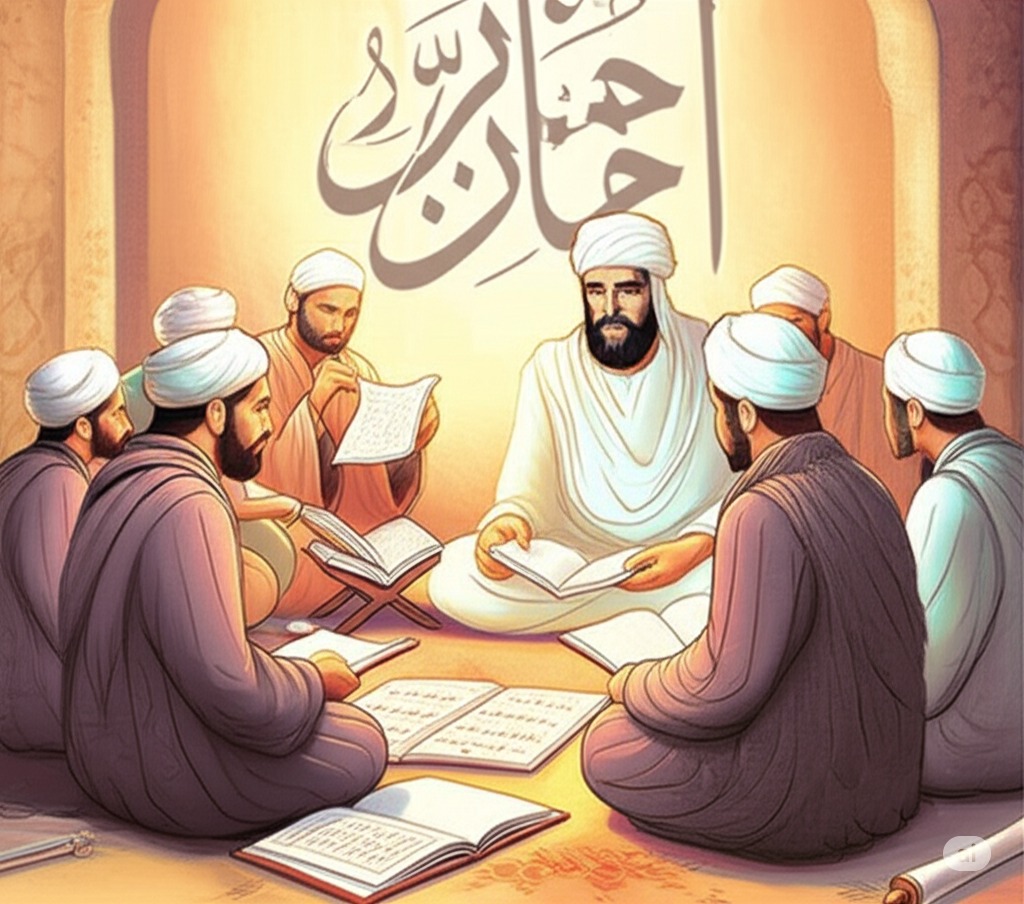
The Mosque of the Prophet in Madinah was not only a center of worship but also a center of learning. It served as the earliest madrasa, where the Prophet personally taught the Qur’an, ethics, jurisprudence, and the fundamentals of faith. His companions, known as the Sahaba, became students in this sacred institution. Among them were figures such as Abdullah ibn Abbas, Aisha bint Abi Bakr, and Abdullah ibn Mas’ud, who later became renowned scholars and custodians of Islamic knowledge. The informal, discussion-based teaching methods employed by the Prophet fostered a culture of inquiry and mutual respect.
Education under the Prophet was holistic. It emphasized not just memorization but understanding, contemplation, and implementation. He advocated for learning to serve justice, promote equity, and ensure the welfare of all individuals in society. For example, his teachings on trade and economic ethics were not mere abstract principles but were taught to guide real-world transactions. Similarly, the Prophet instructed people in legal reasoning, healthcare practices, and interpersonal conduct. The result was a dynamic and ethical society grounded in knowledge and divine guidance.
Importantly, the Prophet Muhammad promoted education among women—an unprecedented move in a tribal society where female literacy was almost nonexistent. He praised women like Aisha (RA) for their intellect and narrated hadith from her extensively. Her home became a hub of scholarly activity and learning, particularly in the areas of hadith, medicine, and fiqh. The Prophet encouraged mothers to educate their children, thereby recognizing women as both recipients and transmitters of knowledge. His attitude laid the groundwork for the flourishing of female scholarship in later Islamic history.
The Prophet’s encouragement of scientific observation and rational thinking is equally significant. He urged his followers to observe the heavens, reflect on the creation of the earth, and study the patterns of nature. Such teachings cultivated curiosity and inspired the Muslim ummah to contribute to fields such as astronomy, mathematics, medicine, and geography during the Islamic Golden Age. This intellectual heritage traces directly back to the foundations laid by Prophet Muhammad.
Moreover, the Prophet emphasized the importance of intention and ethics in education. Seeking knowledge was not a pursuit for status or wealth but an act of devotion. He warned against arrogance and pride among scholars, instead promoting humility, sincerity, and the dissemination of knowledge for the betterment of humanity. This moral framework transformed education from a personal privilege into a collective responsibility.
The Prophet’s final sermons continued to underscore the importance of knowledge. He reminded his followers to cling to the Qur’an and Sunnah, to ask questions, and to seek guidance from the knowledgeable. He predicted that ignorance would be one of the signs of societal decline, thereby reinforcing the urgency of maintaining a commitment to learning. His legacy inspired centuries of Islamic scholarship, libraries, translation movements, and universities across the Muslim world—from Baghdad and Cairo to Cordoba and Timbuktu.
In conclusion, Prophet Muhammad (peace be upon him) was not only the last Messenger of God but also one of the greatest advocates for education in human history. His legacy shaped an intellectual civilization that valued learning, critical thinking, and moral development. He transformed a largely illiterate society into one that treasured the pen as much as the sword, revered teachers as much as warriors, and valued the seeker of knowledge as much as the ascetic. The educational model he introduced remains a timeless guide for personal development, social progress, and spiritual enlightenment.
About the Author